

Opera Turbo 2009 – 2013
The compression behind Opera Mini, brought to the desktop. On a slow or expensive connection, pages traveled through Opera's servers and arrived much smaller.
How it worked
When Opera Turbo was on, Opera fetched pages through a compression proxy run by Opera Software. Text was compressed and images were recompressed at a lower quality before being sent to the browser. On dial-up, mobile data or a crowded hotel Wi-Fi, pages could load several times faster.
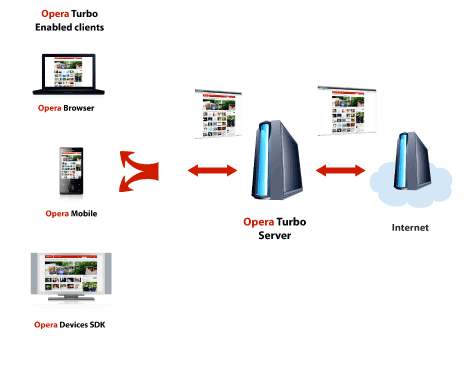
One Turbo server for the Opera browser, Opera Mobile and the Opera Devices SDK, between them and the Internet. A diagram from Opera's business pages.
Turbo was unveiled for Opera Mobile 9.7 at Mobile World Congress in February 2009. On the desktop it first appeared in a Labs release on March 13, 2009, and shipped with Opera 10.00 on September 1, 2009. It could switch itself on automatically when the connection was slow, and images could be reloaded at full quality with a click. The same technology later became the "Off-Road" mode of the Chromium-based Opera.
Built on Opera Mini
Opera Mini had always used Opera's servers to render and compress pages for phones. Turbo kept the full browser engine on the computer and only used the servers to shrink the data, which made it compatible with every site.
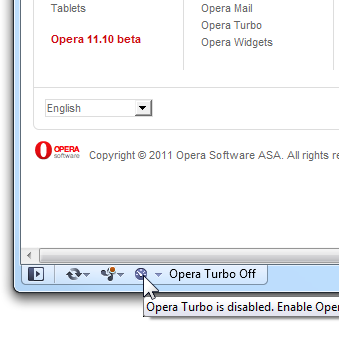
The Turbo button in the status bar.
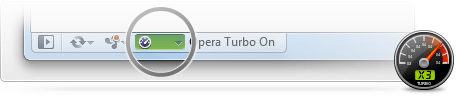
Opera Turbo in the Opera 10.5 feature list.
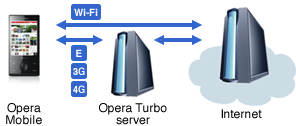
Turbo in Opera Mobile for Android.